


Tint Education What and Why
Not all tint is Created equal
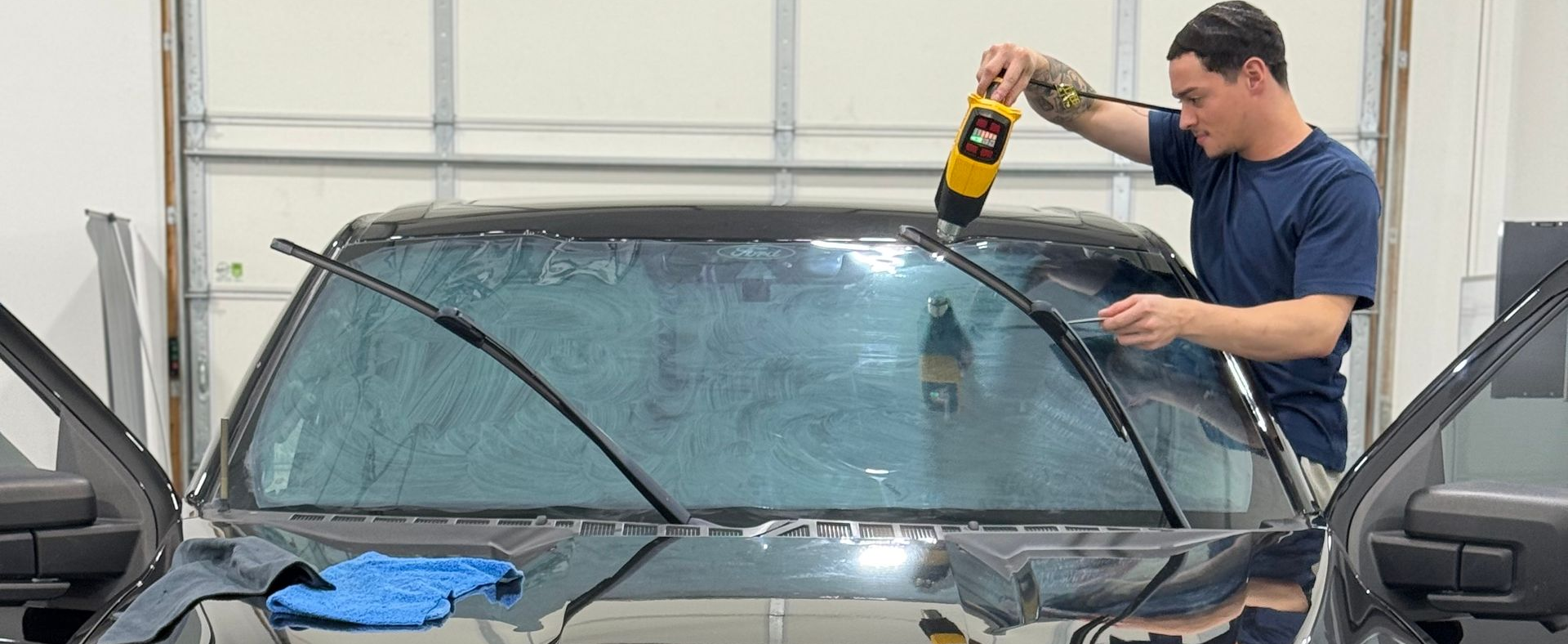
What is Tint?
- A thin, multi-layered, polyester film applied to the interior surface, designed for privacy and protection from the sun.
What does Tint do?
- It can Provide privacy, glare reduction, heat rejection and cancer protection believe it or not.
Why is this shop so much cheaper than you?
- This isn't actually always the case; in most scenarios that we have seen, you're actually being lied to and overpaying for the quality of tint that was put on your car. Most of the time, when you're focused on the bottom dollar, you are most likely being lied to and this can lead to being told you're getting "X" film, when they actually put on "Y" film, or they simply don't tell you at all. Realistically though, the shop you thought is more expensive and upfront about cost, is simply providing you with better film quality and service. Usually, we notice that the more haze you get out of these cheaper films is actually making it harder to look out of. Have you ever noticed someones tint turning purple, or someone driving past you and the whole back window is all bubbled up, and you are thinking, "wow where did they get that done?" You might be going to the same place without even knowing it.
Single dyed film vs carbon vs ceramic?
- Single Dyed Film- It is a dual layer with dye sandwiched between layers.
- Pros: Cost, Privacy
- Cons: Not color stable, bubbling, very little heat rejection
- Carbon Tint- carbon particles infused into multi-layers rather than just dye.
- Pros: Depending on the quality of the carbon film, you can get between 60-80% heat rejection and really high infrared rejection. It does still maintain a dark matte finish, and some carbon tints can have more of a brown hue to them. Cheaper than ceramic, not much more expensive than single dyed film. Color stable, and most films offer lifetime warranties
- Cons: Even though it provides great infrared properties on really warm days, the heat rejection isn't at good as ceramic. It can be harder to look out of, compared to ceramic, because carbon film always has a minor haze to it, and to a trained eye it becomes more noticeable.
- Ceramic Tint- Non-conductive, non-metallic ceramic particles.
- Pros: High infrared protection, and high heat rejection. Most ceramic tints provide 90-99% heat rejection properties. Superior visibility, (seriously it's so easy to look out of). Glare is greatly reduced.
- Cons: More expensive; you can easily spend over $600 depending on what vehicle you have.
What do the percentages mean?
- Tint percentages do have a meaning: Tint percentages are equivalent to how much light is allowed through the vehicle. 5% is the darkest, while 70% is the lightest.
What is IRR and UVR?
- IRR: Infrared Rejection- This is your heat rejection properties.
- UVR: Ultraviolet Rays- This is the cancerous rays from the sun that get blocked through the tint.
What is a shaved edge?
Shaving an edge is when you leave excess film at the top of the window edge that is then filed down for no gap from the top of the window. Usually this is common practice on frameless windows. Some people shave it with either a knife or a razor, but that can lead to some jagged cuts over a template pattern where the top edge is machine cut.
What is the difference between top loading and bottom loading?
- Top Loading- Top loading is the process of lining up the top edge first, then tucking the bottom under the gasket or to the gasket.
- Pros: Faster
- Cons: Can have more contamination
- Bottom Loading- Bottom loading is the process where you remove the door panels and the gasket starting at the bottom and then lining up the top edge.
- Pros- Cleaner, more controlled
- Cons- Slower, more time consuming
Why we Choose Covrgard?
I cannot sell something I don't believe in.
In our shop we don't even offer single dyed film; its not worth your money. We use Covrgard, not because it's inexpensive, but because it's the highest rated film I have ever metered, (even if that means I have to eat the extra cost of the film because of its superior properties). We see so much of the exact opposite- buy the cheapest film, get the customer in, and send em on their way- that it makes me upset.
This film also is very nice to remove; some films have great properties, but if for some reason we needed to remove it, it would leave all the glue behind and it's just an absolute mess.